
acceptance
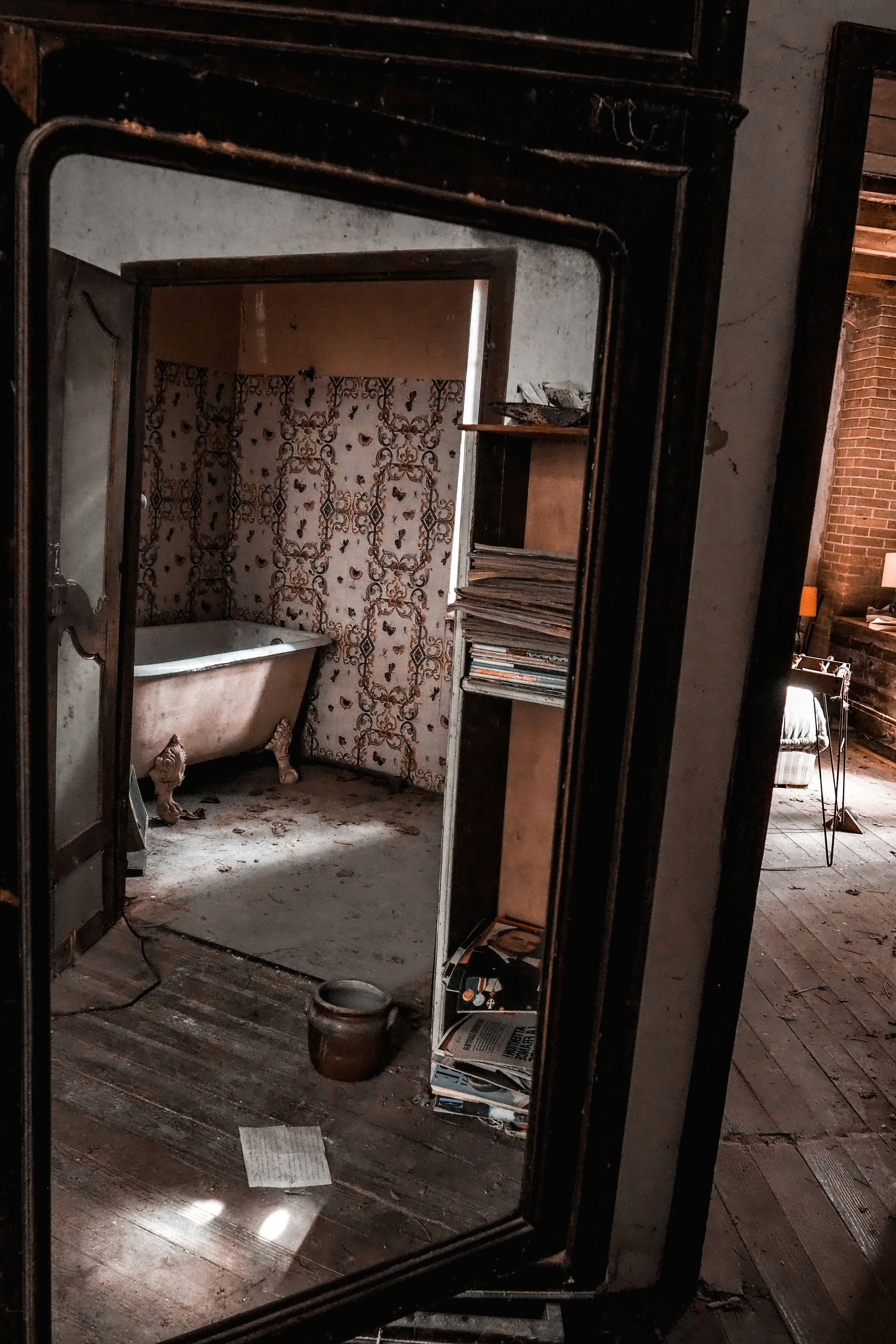
At sixteen, I went to a series of parties in a house with a bathtub in the living room. Building work, apparently, though it never seemed to progress. The rooms were cavernous and cold. We drank cheap wine or whatever we could steal and dilute: ouzo, advocaat, port. Sprawled in half-darkness, we were drunk and certain this was living. Occasionally, a camera flash rendered us into teenage ghosts. Pet rabbits wandered freely through the damp rooms, erratic white exclamation marks scurrying at our feet.
At one of these parties, I can’t remember which, I ended up nose to nose with a boy in the tub, passing syrupy wine back and forth. In the next room, tinny electro-pop drifted from under the door alongside the unmistakable sound of fumbling, awkward sex. His face leaned closer to mine, the sweetness of his breath. I should’ve known what was coming. He wanted to kiss me. I wanted to talk about death.
Morbid preoccupation runs in my family. Specifically, down my maternal line. My grandma recounted horror stories about the neighbours’ untimely deaths (blown up by a hair dryer, choked on a bullet) at any opportunity. She had dark comic timing, of which I’m not even sure she was aware. Later, and especially after she first got ill, my mam would talk dramatically about the sword of Damocles (she loved classical myths) or about the grim reaper who was lying in wait. I have grown to accept that this tendency — to lean into dark corners, root through the weeds, find the dirt and the rot — is in me too.
When I was in primary school, I wrote a short story that worried my teachers. It was about losing a parent: a metaphor about a lingering smell that wouldn’t fade. I didn’t want to be a writer then. I wanted to be a travel agent (free holidays) or an archaeologist (I’d seen Indiana Jones). Neither my mam or my dad knew where the story had come from. I couldn’t explain it either. Maybe it was because my mam had told me about her dad who’d died. Maybe it was something I’d read. What I knew was: from that point on, having learned I could unnerve adults with words, I wanted to be a writer.
A year ago, I started these letters as a commitment to myself: just write. But I’ve been writing the same thing, in different forms, since I was eight. I’ve wondered if this preoccupation with death is natural for any artist, but there’s a difference between writing to understand and writing in circles. Between writing in circles and not writing at all. Like my mam, and her mam, I have a mind that snags on misery, that likes to stare down the worst. Some part of me will always move this way.
Writing these letters for a year, as well as returning to short fiction, has taught me about my own neurotic patterns. The ritualistic way certain sentences return, certain rhythms repeat. What to hold back and what to share. How I prefer to write (late at night, intensely focused) and what that demands. And that starting (always the worst part) is less painful than not starting at all. Writing requires bravery, I think, or a certain level of self-delusion. I can’t say that I’m brave, but I’m no longer stuck.
I’m writing this now in the early hours, listening to the birds outside, waiting for light. I’m sat opposite my mam’s typewriter and her notebooks. Even after the haemorrhage, when so much was lost, she continued to practice shorthand. It was her proudest achievement—that, and becoming a mother. When I miss her, I like to look at her handwriting, the familiar marks she made (in birthday cards, on clothes labels, notes around the house) that feel so enduring, and I can hear her voice in my head and see her face clearly, and it’s as if she is here, willing me on.
These letters have been a personal account of grief because I needed them to be. But they're changing slightly —not away from grief (it's still here) but toward environment, queerness, the everyday and its thresholds. Maybe the occasional short story. I hope you keep enjoying them as much as I enjoy writing them.
This substack is free, but if you want to support my writing, you can buy me a coffee via ko-fi. And if you’re grieving and need support, I’ve gathered some resources here.